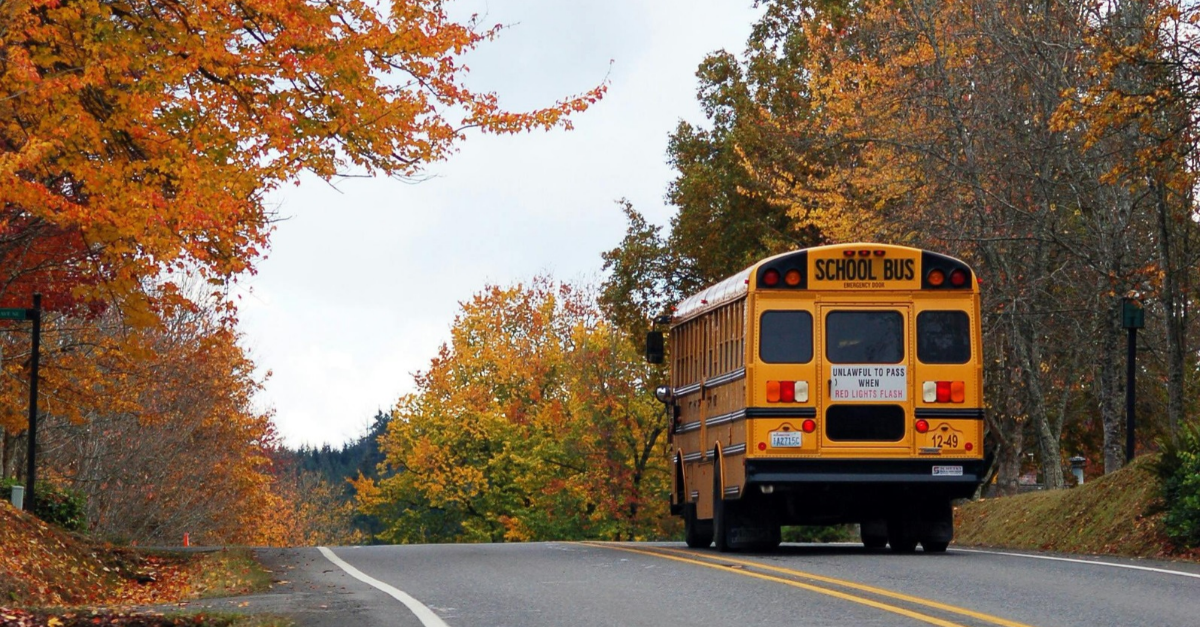
The yellow school bus is one of the most recognizable parts of the American school day. For millions of students, it provides a safe and reliable way to get to class. But students don't all have the same journey to school. Some attend a school outside their neighborhood. Others travel to specialized programs, live in rural communities, require transportation accommodations, or face circumstances that can change where their trip begins.
The school bus remains essential, but some trips require something different.
Having an option isn't the same as reaching it
Research from the Urban Institute helps illustrate the issue. Looking at Denver, Detroit, New Orleans, New York City, and Washington, DC, researchers found significant differences in how many schools students could realistically reach depending on their available mode of transportation.
In nearly every grade analyzed, students could reach at least 10 schools within a 15-minute drive. By public transportation, they could typically reach fewer than 10 in the same amount of time.
The findings are specific to the five cities studied, but they highlight an important distinction: having an educational option available is not the same as having a practical way to reach it. That difference can become even more significant when a trip falls outside conventional school transportation.
Some families can bridge that gap with a personal vehicle, flexible work hours, or help from relatives. Others may not have those options. Transportation can therefore influence which educational opportunities are realistically within reach.
When a student's needs call for something different
For some students, the need for a different transportation solution goes beyond geography or household resources.
Federal law recognizes this distinction. Under the Individuals with Disabilities Education Act (IDEA), transportation can be provided as a related service when it is necessary for a child with a disability to benefit from special education. Depending on the student's individual needs, that can include specialized transportation arrangements or equipment.
Geography creates another challenge. Moving groups of students through a dense urban area is fundamentally different from transporting students across long distances in rural or low-density communities. Students may also attend magnet schools, charter schools, specialized programs, or other educational settings beyond their immediate neighborhoods.
And sometimes the journey changes even when the school does not. A student in foster care, for example, may change residences while remaining at the same school. Suddenly, a route that worked yesterday may no longer work tomorrow.
These situations are different, but they point to the same reality:
Student transportation is not one-size-fits-all because students' lives aren't one-size-fits-all.
Transportation is part of educational access
A school can offer exceptional teachers, programs, resources, and opportunities. But those opportunities only matter if students can actually reach them. That is why transportation should be viewed as part of educational access, not simply as the trip that happens before and after school.
The goal isn't to replace traditional school transportation. School buses remain the backbone of student mobility across the country. The opportunity is to complement that system when a student's circumstances require something different.
At Route A, that is part of the role we play. Across more than 10 states and 64 counties, Route A supports over 2,500 weekly trips, helping connect students with the schools and opportunities they need to reach.
But every one of those trips depends on someone behind the wheel. As transportation needs become more diverse, reliable drivers are an essential part of making those connections possible. For a driver, a route may be part of the workday. For a student, it can be the reason they make it to class.
Want to help make those rides possible? Explore driving opportunities with Route A and find an available route in your area.